
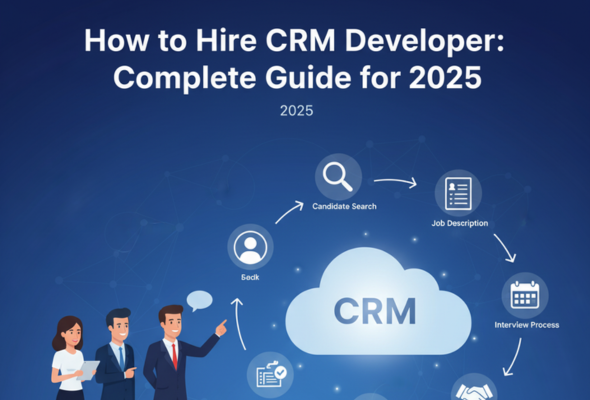
Businesses today need more than just software to manage customer relationships. They need skilled professionals who can customise, integrate, and maintain systems that grow with their organisation. If you’re looking to hire a CRM developer, you’re making a smart investment in your company’s future. But where do you start?
This guide walks you through everything you need to know about hiring the right CRM developer for your business needs.
A CRM developer specialises in building, customising, and maintaining Customer Relationship Management systems. These professionals write code, create custom features, integrate third-party applications, and ensure your CRM platform works smoothly with your existing business processes.
Here is why CRM developers matter. They transform standard CRM platforms into tailored solutions that match your specific workflows. Rather than forcing your team to adapt to generic software, a skilled developer adapts the software to your team.
CRM developers work with various platforms, including Salesforce, Microsoft Dynamics 365, Zoho CRM, and custom-built solutions. They understand database management, API integration, user interface design, and business logic programming.
When you hire a CRM developer, look for these technical abilities:
Your hiring options fall into several categories:
Start by documenting exactly what you need. Write down:
Clear requirements help potential developers provide accurate proposals and prevent scope creep later.
CRM developer costs vary widely based on several factors. In the United States, annual salaries average around £75,000 to £95,000. Contract developers charge between £40 to £150 per hour depending on specialisation and experience.
Consider total project costs beyond just developer fees. Budget for testing, training, documentation, and post-launch support.
Different platforms suit different hiring needs:
Review portfolios and past projects. Look for experience with your specific CRM platform and similar business challenges. Ask about their largest projects, biggest technical challenges, and how they handled difficult client situations.
Check references thoroughly. Contact previous clients and ask about communication quality, deadline adherence, technical competence, and problem-solving skills.
Prepare questions that reveal both technical knowledge and practical experience:
Consider including a small paid test project. This reveals work quality, communication style, and ability to meet deadlines better than interviews alone.
Professional certifications demonstrate commitment and expertise. For Salesforce developers, look for Platform Developer I and II certifications. Microsoft Dynamics developers should hold relevant Power Platform or Dynamics 365 credentials.
Whilst certifications don’t guarantee success, they show foundational knowledge and ongoing learning commitment.
Watch for warning signs during your hiring process:
If building an internal team feels overwhelming, partnering with established CRM consultancies offers significant advantages. Companies like Sailwayz bring certified Salesforce consultants, proven methodologies, and comprehensive support throughout implementation and beyond.
Development partners handle recruitment, training, and team management whilst you focus on your core business. They provide diverse expertise, from developers and administrators to business analysts and project managers.
Let’s break it down. Rather than spending months recruiting, interviewing, and onboarding individual developers, you access a complete team immediately. Partners also stay current with platform updates and best practices, ensuring your CRM solution uses the latest features.
Once you’ve hired your developer or development team, set clear expectations:
Choosing the right CRM developer involves balancing multiple factors. Technical skills matter, but so do communication abilities, business understanding, and cultural fit.
Compare candidates across these dimensions:
Trust your instincts. If something feels off during interviews or negotiations, investigate further before committing.
Ready to move forward? Start by clearly documenting your requirements and business goals. Research potential developers or development partners who specialise in your chosen CRM platform.
Organisations seeking comprehensive Salesforce solutions can connect with Sailwayz for expert consultation and implementation services. Their certified team brings years of experience helping businesses customise CRM systems that drive growth and improve customer relationships.
The right CRM developer transforms your customer management approach from administrative burden to strategic advantage. Take time to find professionals who understand your business, communicate clearly, and deliver quality solutions that grow with your organisation.
Q.What qualifications should a CRM developer have?
Look for platform-specific certifications like Salesforce Platform Developer or Microsoft Dynamics credentials. Strong candidates have computer science degrees or equivalent experience, plus portfolios demonstrating successful CRM projects. Programming proficiency in languages like Apex, C#, or JavaScript is also required. The best developers combine technical skills with business understanding.
Q.How much does it cost to hire a CRM developer?
Costs vary significantly by location and expertise level. Full-time UK developers typically earn £60,000 to £120,000 annually. Freelance developers charge between £30 to £100 per hour. Offshore developers often cost 30-50% less. Project complexity, timeline, and required features also affect total investment. Always request detailed proposals before committing.
Q.How long does CRM development typically take?
Simple customisations might take 2-4 weeks, whilst comprehensive implementations can require 3-6 months or longer. Timeline depends on system complexity, integration requirements, data migration needs, and team availability. Rushed projects often result in bugs and user frustration. Plan realistic timelines that allow proper testing and training.
Q.Should I hire a freelancer or development agency?
Freelancers work well for small projects, specific features, or tight budgets. Agencies like Sailwayz suit larger implementations needing diverse skills, project management, and ongoing support. Consider your project scope, internal resources, and long-term maintenance needs. Agencies provide backup if team members leave.
Q.What CRM platforms do developers specialise in?
Most developers focus on major platforms like Salesforce, Microsoft Dynamics 365, HubSpot, Zoho CRM, or SugarCRM. Each platform requires different technical skills and certifications. Some developers work across multiple systems, whilst others specialise deeply in one. Match developer expertise to your chosen or existing CRM platform for best results.

Joshua Eze is the Founder & Salesforce Architect at Sailwayz, a certified Salesforce Consulting Partner based in the UK. With over 6 years of experience leading CRM transformations, he is a certified Application & System Architect passionate about using technology to simplify business processes. Joshua helps companies unlock the full potential of Salesforce with strategic, scalable, and secure solutions.
