sap crm vs salesforce

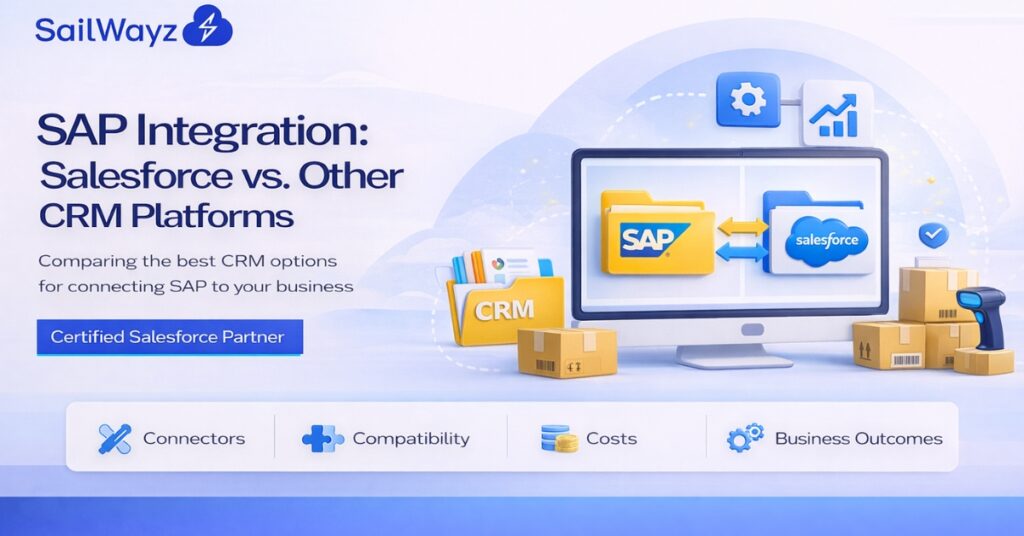
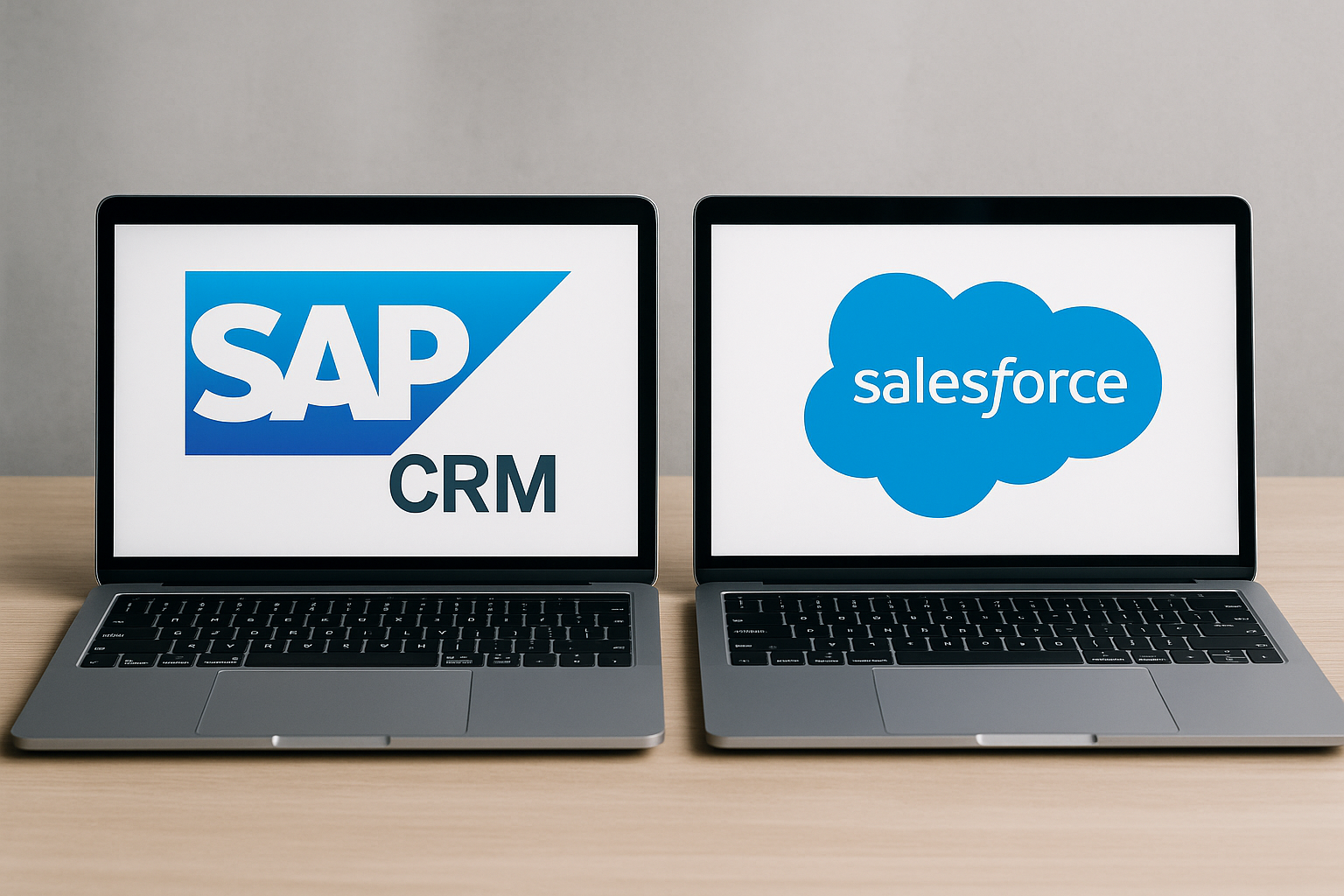
SAP CRM vs Salesforce: A Detailed Comparison

24/07/2025

Introduction

In today’s dynamic and competitive marketplace, Customer Relationship Management (CRM) solutions have become essential for organisations striving to maintain strong relationships with customers while streamlining sales, marketing, and service functions. Two of the most recognised names in the CRM space are SAP CRM and Salesforce.

While both platforms offer robust capabilities, their strengths, deployment models, and user experiences vary significantly. Businesses must choose wisely based on their size, industry, objectives, and IT infrastructure. In this detailed article, we will explore the major differences and similarities between SAP CRM and Salesforce, comparing their features, benefits, limitations, pricing, and more.

Before diving into the comparison, let’s first take a look at a leading service provider that empowers businesses with Salesforce solutions.

Saliwayz CRM – Your Salesforce CRM Consulting Partner

Saliwayz is a premier Salesforce CRM consulting company that specialises in delivering tailored solutions to optimise business performance. With a client-centric approach, Saliwayz works closely with companies to design and implement customised Salesforce strategies that enhance operational efficiency, improve sales processes, and increase revenue.

What sets Saliwayz apart is its dedication to understanding each client’s unique challenges and goals. Through a combination of expertise, innovation, and best practices, the Saliwayz team helps businesses harness the full potential of Salesforce CRM to drive measurable results. Whether you’re starting fresh or upgrading an existing system, Saliwayz provides the support and knowledge you need for success.

Overview of SAP CRM

SAP CRM (Customer Relationship Management) is part of the larger SAP Business Suite. It was designed to help businesses manage customer relationships across sales, service, and marketing, both for B2B and B2C companies.

SAP’s CRM capabilities can be integrated into SAP’s broader ERP ecosystem, making it a natural choice for companies that already rely on SAP’s enterprise resource planning tools.

Key modules of SAP CRM include:

  • Sales Management
  • Marketing Automation
  • Customer Service and Support
  • Partner Channel Management
  • Analytics and Reporting
  • Field Applications

SAP CRM can be deployed on-premise or through SAP’s cloud-based solution, SAP Sales Cloud, which is part of the SAP C/4HANA suite.

Overview of Salesforce CRM

Salesforce CRM is a leading cloud-based platform that helps businesses manage customer relationships and automate sales, marketing, and service tasks. As a pioneer in cloud CRM, Salesforce has become the benchmark in the industry, offering extensive features and integrations.

Salesforce’s ecosystem includes:

  • Sales Cloud
  • Service Cloud
  • Marketing Cloud
  • Commerce Cloud
  • Analytics Cloud
  • AppExchange (third-party integrations)

Because it’s built entirely in the cloud, Salesforce allows teams to collaborate and operate from anywhere with real-time access to customer data.

Core Feature Comparison: SAP CRM vs Salesforce

Deployment Options

SAP CRM:

  • Offers both on-premise and cloud-based deployment.
  • Suitable for companies needing on-site data control or existing SAP infrastructure.

Salesforce:

  • Fully cloud-based, with no on-premise installation required.
  • Ideal for modern businesses seeking flexibility, scalability, and remote access.

Winner: Salesforce – Offers greater flexibility and ease of implementation for cloud-based operations.

User Interface and Usability

SAP CRM:

  • Known for a more traditional and technical interface.
  • Often requires training for new users.
  • May not be as intuitive for non-technical staff.

Salesforce:

  • Clean, modern, and user-friendly interface.
  • Designed for ease of use, with customisable dashboards and reports.
  • Drag-and-drop functionality, mobile access, and AI-powered suggestions.

Winner: Salesforce – Provides a more intuitive and visually engaging experience.

Sales Force Automation

SAP CRM:

  • Offers strong sales management tools including lead and opportunity management.
  • Integrates well with other SAP modules for complete supply chain visibility.

Salesforce:

  • Industry-leading sales tools.
  • Powerful automation for leads, deals, forecasting, territory planning, and collaboration.
  • Einstein AI enhances sales productivity with predictive insights.

Winner: Salesforce – Offers more comprehensive and intelligent sales automation.

Marketing Automation

SAP CRM:

  • Provides solid marketing features such as campaign management and segmentation.
  • Strong in data integration but lacks flexibility and modern UX in legacy versions.

Salesforce:

  • Offers powerful marketing tools through Marketing Cloud.
  • Advanced automation, AI-personalised journeys, real-time audience targeting.
  • Seamless integration with email, social, mobile, and ads.

Winner: Salesforce – More robust and adaptable for today’s multi-channel marketing needs.

Customer Service and Support

SAP CRM:

  • Strong service functionalities.
  • Ideal for service-heavy industries needing complex service ticket management.

Salesforce:

  • Industry-leading customer service tools via Service Cloud.
  • Includes case management, live chat, knowledge base, customer portals, and field service.
  • AI and automation boost efficiency.

Winner: Salesforce – More innovative and customer-friendly service solutions.

Integration and Ecosystem

SAP CRM:

  • Integrates seamlessly with SAP ERP, SAP S/4HANA, and other SAP modules.
  • May require SAP-specific knowledge for integration with non-SAP tools.

Salesforce:

  • Extensive integrations via AppExchange.
  • Connects easily with thousands of third-party apps including Mailchimp, Slack, HubSpot, QuickBooks, and more.

Winner: Salesforce – More versatile ecosystem with easier third-party integrations.

Customisation and Scalability

SAP CRM:

  • Customisable, especially when integrated into the SAP environment.
  • More complex and costly to scale or modify.

Salesforce:

  • Highly customisable with low-code and no-code tools.
  • Easily scalable for businesses of all sizes.

Winner: Salesforce – Simpler and faster customisation to suit evolving business needs.

Analytics and Reporting

SAP CRM:

  • Offers robust analytical tools but often relies on SAP BI solutions.
  • Strong in deep, enterprise-wide data insights.

Salesforce:

  • Advanced reporting and dashboards out-of-the-box.
  • Einstein Analytics provides AI-driven insights for smarter decision-making.

Winner: Salesforce – More user-friendly and powerful analytics for all levels of users.

Mobile Accessibility

SAP CRM:

  • Mobile capabilities are available but often limited in legacy systems.
  • SAP Fiori and mobile extensions improve the experience, but setup can be complex.

Salesforce:

  • Built with mobile-first thinking.
  • Salesforce Mobile App is highly functional and easy to use.

Winner: Salesforce – Superior mobile functionality.

Artificial Intelligence

SAP CRM:

  • Offers AI capabilities through SAP Leonardo, but with limited CRM focus.

Salesforce:

  • Einstein AI deeply embedded across all CRM modules.
  • Predictive analytics, automated recommendations, and smart insights.

Winner: Salesforce – More intelligent and impactful use of AI in CRM.

Pricing and Cost Considerations

SAP CRM:

  • Pricing varies widely based on deployment (on-premise vs cloud), modules, and user licenses.
  • Higher upfront costs for on-premise solutions.
  • Long-term maintenance costs may be significant.

Salesforce:

  • Subscription-based pricing model.
  • Transparent packages (Essentials, Professional, Enterprise, Unlimited).
  • Scalable based on business size and requirements.

Winner: Depends on your organisation’s needs – Salesforce offers more predictable and flexible pricing, while SAP CRM may be cost-effective for large enterprises already using SAP products.

Industry Suitability

SAP CRM:

  • Best suited for large, global enterprises with complex operations.
  • Common in manufacturing, logistics, utilities, and finance.

Salesforce:

  • Suitable for businesses of all sizes and industries.
  • Strong presence in retail, technology, education, healthcare, real estate, and non-profits.

Winner: Salesforce – Broader appeal and versatility across diverse industries.

Implementation Time

SAP CRM:

  • Longer implementation cycle.
  • Requires in-depth planning, especially with on-premise solutions.

Salesforce:

  • Faster implementation thanks to cloud-native setup and consulting partners like Saliwayz.
  • Offers tools and templates to speed up deployment.

Winner: Salesforce – Shorter time-to-value.

Support and Community

SAP CRM:

  • Offers professional support via SAP Support Portal.
  • Active user community, especially among SAP-centric businesses.

Salesforce:

  • Extensive support options: Trailblazer Community, help docs, phone support, consulting partners, training via Trailhead.

Winner: Salesforce – More vibrant ecosystem of support and continuous learning.

Security and Compliance

Both platforms offer robust security features, including:

  • Role-based access
  • Data encryption
  • GDPR compliance
  • Audit trails

SAP CRM:

  • Trusted by highly regulated industries.

Salesforce:

  • Trusted by millions globally.
  • Certified across multiple standards: ISO, SOC, HIPAA, GDPR.

Winner: Tie – Both are enterprise-grade and trusted globally.

Pros and Cons Summary

SAP CRM – Pros

  • Deep integration with SAP ERP
  • Strong service and industry-specific tools
  • Good for large, complex enterprises

SAP CRM – Cons

  • Steep learning curve
  • Longer implementation
  • Limited modern UI in some versions

Salesforce – Pros

  • User-friendly and intuitive
  • Quick deployment
  • Strong ecosystem and integrations
  • AI-powered insights
  • Scalable for all business sizes

Salesforce – Cons

  • Subscription costs can add up
  • Requires internet connectivity
  • May involve third-party tools for advanced custom needs

Final Verdict: Which CRM Should You Choose?

When it comes to SAP CRM vs Salesforce, your decision should hinge on your business needs, existing systems, and digital transformation goals.

  • Choose SAP CRM if you are a large enterprise already using SAP ERP solutions and require highly tailored, industry-specific applications.
  • Choose Salesforce if you’re looking for a flexible, cloud-based, user-friendly CRM with cutting-edge technology, fast deployment, and wide scalability.

For most growing businesses and even large enterprises seeking innovation and agility, Salesforce emerges as the more adaptable and comprehensive solution.

Also Read: – Best Client Relationship Management Software

Conclusion: Let Saliwayz Help You Maximise Salesforce CRM

CRM adoption can be complex, but with the right partner, it becomes a catalyst for transformation. Saliwayz is your trusted Salesforce CRM consulting provider, committed to guiding your business through every step from strategy to implementation to success.

With tailored solutions, expert insights, and a focus on delivering real results, Saliwayz ensures you don’t just use Salesforce you make the most of it. Whether you’re moving from SAP CRM or just starting out, let Saliwayz empower your growth journey.